
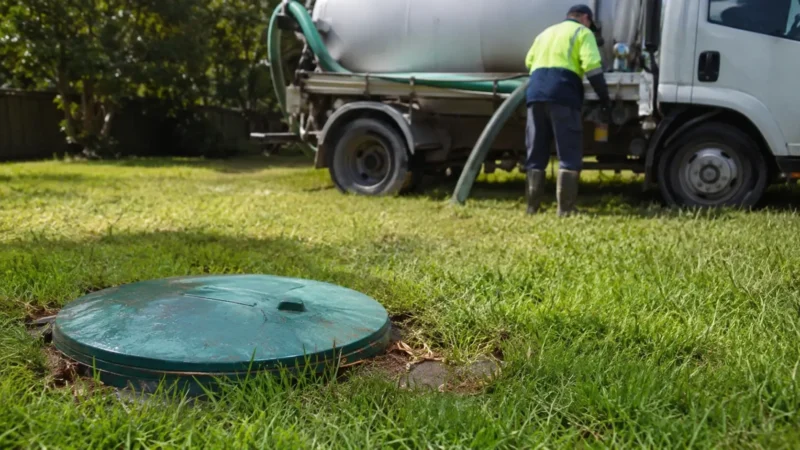
A septic system rarely fails without warning. It usually starts small, a toilet that gurgles when the washing machine drains, a patch of grass near the tank that stays greener than the rest of the yard even in a dry week.
EVR Plumbing gets called out across the Gold Coast, Logan, Ipswich, Beaudesert and the Scenic Rim for the same handful of symptoms over and over, and by the time most people pick up the phone, the tank has been struggling for a while already.
There’s no call-out fee to get someone out to have a look, so putting it off to “see if it’s really necessary” usually costs more in the long run than the visit would have.
If any of what follows sounds familiar, our septic tank services has more on what an inspection actually involves.
How a septic system is meant to work
A septic tank isn’t just a holding box. Solids settle at the bottom and break down slowly with the help of bacteria, while the liquid layer, called effluent, flows out to a disposal trench or absorption field where the soil finishes the job.
That balance only holds if the tank is pumped out before solids build up too high, and if the outlet baffle and pipework are intact. On one call-out in Beaudesert, the outlet baffle had rotted through completely, so solids that should have stayed in the tank were flowing straight into the trench and clogging it.
That’s the sort of fault you can’t see from the surface until the symptoms show up.
Signs of failing septic system trouble to watch for
Some of these show up on their own. Others tend to turn up together, which is usually the bigger warning.
- Drains that run slow in more than one part of the house at the same time, not just the one sink that’s always been a bit sluggish
- A sewage smell around the tank lid, the inspection ports, or the disposal area, especially noticeable outside near the yard
- Ground over the trench or absorption field that’s soggy, spongy underfoot, or unusually green compared to the rest of the lawn
- Gurgling from toilets or drains that happens even when nothing’s running
- Sewage or grey water backing up into the lowest drain in the house, often a shower base or laundry floor drain
- Effluent pooling or surfacing near the tank lid after normal use, not just after heavy rain
If you’re only seeing one of these, it might be a smaller fix, like a blocked inlet pipe. If you’re seeing three or four at once, the system’s telling you it can’t keep up with what’s going in.
Why the smell gets worse after rain
A lot of acreage properties across the Scenic Rim sit on clay-heavy soil that doesn’t drain fast. When the ground is already saturated from rain, the disposal trench has nowhere to send the effluent, so it sits closer to the surface and the smell gets stronger.
That’s not always a sign the tank itself has failed. Sometimes it just means the trench needs to be reworked or extended, particularly on properties where the system was sized for the house rather than the actual soil conditions.
Either way, if the smell only shows up after rain and disappears within a day or two, it’s worth mentioning that pattern when you book someone out, because it points the plumber toward the trench rather than the tank.
What happens if you leave it
Ignoring these symptoms doesn’t make the problem go away. A tank that’s overdue for a pump-out keeps pushing more solids into the trench, and once the trench is clogged with solids, replacing it is a bigger job than a scheduled pump-out would ever have been.
There’s also a genuine health risk. Untreated effluent surfacing in the yard, especially near a bore, dam, or waterway, can contaminate groundwater and create problems for the whole property, not just the septic system.
Queensland has specific requirements around on-site sewerage facilities, and the state government’s guidance on installing, altering, and maintaining these systems, published through Business Queensland, is a useful reference if you’re trying to work out whether a repair needs council notification.
What an inspection actually involves
There’s no need to guess at what’s wrong before booking someone out. A proper septic inspection starts with lifting the lid and checking the level of the scum layer on top and the sludge layer at the bottom, since that ratio tells a plumber how close the tank is to needing a pump-out.
From there it’s a check of the inlet and outlet baffles, a look at whether the outlet pipe is running clear or backing up, and a walk over the trench or absorption area to check for wet patches, sunken ground, or root intrusion from nearby trees.
On older systems, especially anything installed before current standards came in, it’s also worth checking whether the tank itself has settled or cracked, which happens more often than people expect on properties with reactive clay soil.
None of that needs to be booked as an emergency call. A same-day visit to check tank levels and walk the trench is usually enough to work out whether it’s a pump-out, a repair, or something that needs a closer look.
What to do next if you’re seeing these signs
Book an inspection before the symptoms get worse, not after. A plumber checking a septic system will usually look at the tank levels, the baffles, the outlet pipe, and the condition of the trench before deciding whether it’s a pump-out, a repair, or something bigger. Most of the time it’s the first two.
Eben and the team at EVR Plumbing handle septic pump-outs, repairs and full inspections across the Gold Coast, Logan, Ipswich, Beaudesert and Scenic Rim, and there’s no call-out fee whether it turns out to be a five-minute fix or a full trench replacement. If it’s been more than three to five years since the tank was last pumped out, that’s usually the first thing worth booking in, even if nothing seems wrong yet.
Acreage properties tend to get overlooked here, because a septic system that’s been fine for a decade can still fail without much warning once the tank finally fills past the point the baffles can manage.
Newer builds on smaller blocks run into a different version of the same problem, a trench that was sized correctly for the original owners struggles once a bigger family moves in and the daily water use goes up. In both cases, the fix usually isn’t a new system.
It’s catching the tank or the trench before either one gets pushed past what it can handle.
Frequently asked questions about failing septic systems
Is a smelly septic tank always an emergency?
No. A smell that appears after heavy rain and clears within a day or two is usually a drainage issue in the trench, not a failed tank. A smell that’s constant, or that comes with slow drains and gurgling, is worth getting checked sooner rather than later.
How often should a septic tank be pumped out?
Most household tanks need pumping every three to five years, depending on how many people are on the property and how much water goes down the drain. Properties with a garburator, spa, or a lot of guests tend to need it more often.
Can I fix a failing septic system myself?
No. Septic systems involve wastewater, buried pipework, and in Queensland, specific council and licensing requirements. A DIY attempt on a cracked baffle or a blocked outlet pipe usually makes the repair bigger and more expensive once a licensed plumber does get involved.
Does a failing septic system affect my property’s drinking water?
It can, particularly on acreage properties that rely on a bore or tank water. If the disposal trench sits near a bore, dam, or waterway, surfacing effluent is a genuine contamination risk and should be treated as urgent, not just unpleasant.
If your septic system is showing any of these signs, get in touch with EVR Plumbing and book an inspection before a pump-out turns into a full trench rebuild.