
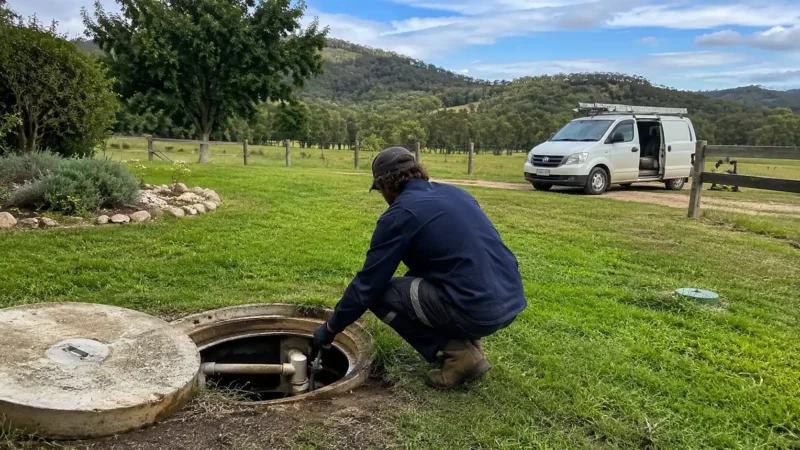
If you own acreage anywhere from Boonah through to Beaudesert and the Scenic Rim, chances are your property isn’t connected to town sewer. It runs on a septic system, and that means Queensland septic regulations apply to you whether you’ve read them or not.
We install and maintain septic systems across these hinterland properties every week, and the calls we get most are from owners who found out about a rule after they’d already broken it.
That’s an expensive way to learn. Call EVR on 0404 323 203 and we’ll check where your property actually stands, with no call-out fee either way.
Queensland septic regulations protect your land and your neighbours
A septic system that’s undersized, poorly sited or failing doesn’t just smell bad. It can push untreated effluent into groundwater, dams, or the neighbour’s bore. Local councils and the state government regulate on-site sewage facilities to stop that from happening, and the rules cover everything from how far your tank sits from a boundary fence to how the wastewater plumber who installs it is licensed.
Every septic system in Queensland, whether it’s a basic septic tank or an aerobic treatment plant, falls under the Plumbing and Drainage Act and the Queensland Plumbing and Wastewater Code. On top of that, your local council issues the actual approval for your specific block, because soil type, slope, and nearby water sources all affect what’s allowed.
Septic approval covers three separate checks
Property owners usually assume “approval” means one signature. It’s closer to three checks working together.
- Local government site approval
- Treatment plant model approval
- Licensed drainer installation
The Queensland Government’s guidance on on-site sewage facilities sets out the performance standards these systems need to meet, and it’s worth a read if you’re buying acreage and want to know what you’re inheriting.
If a system on the block doesn’t have paperwork behind it, that’s a real problem, not a technicality. Councils can and do issue notices requiring unapproved systems to be brought up to standard or replaced. Not sure if your block has that paperwork? Book a check through our septic tank services page before you buy or build.
Septic tank or treatment plant changes your compliance obligations
A traditional septic tank relies on gravity and bacteria to break down solids, then releases partially treated effluent to a sub-surface trench.
An aerobic treatment plant does more work on the wastewater before it’s released, which usually means it can be used for above-ground irrigation instead. The trade-off is that treatment plants need regular servicing, often every three months, with records kept.
Skip those services and you’re not just risking a breakdown. You’re out of compliance, and some councils will follow up.
We’ve pumped out tanks on properties near Canungra where the trench had been draining onto a slope for years because nobody checked the setback distance when the shed went up next to it. The fix wasn’t hard. Finding it before council did would have saved the owner a headache.
Cost is the other reason this decision matters. A basic septic tank and trench system costs less to install, but you’re locked into the setback and soil rules that come with sub-surface disposal.
A treatment plant costs more upfront and adds a service contract, but on a smaller or steeply sloped block it can be the only option a council will approve. Eben and the team walk clients through both before quoting.
Setback distances decide what you can build and where
Setback rules exist because effluent needs distance and time to filter through soil before it reaches anything sensitive. Expect requirements around distance from:
- Property boundaries and buildings
- Bores, dams, and watercourses
- Flood-prone or shallow rock areas
These distances shift depending on your soil’s absorption rate, which is usually tested before a new system goes in. Sandy soil drains fast but filters poorly, so it often needs a bigger setback from water sources.
Heavy clay filters well but drains slowly, which can mean a larger disposal area to handle the same household load. If you’re extending a house or adding a shed on a septic property, check the setbacks before you dig.
We get called out more than once a month for someone who’s already poured a slab too close to the disposal field, and moving a slab costs a lot more than checking a plan first. A quick call to 0404 323 203 before you dig is the cheaper option every time.
Maintenance obligations under Queensland septic regulations
Approval isn’t a one-off event. Most systems come with ongoing conditions attached, and ignoring them is where a lot of property owners get caught out.
- Pump-outs on a real schedule
- Desludging before outlets clog
- Servicing records for treatment plants
- Reporting failing systems fast
A septic tank that’s overdue for a pump-out usually gives warning signs first. Slow drains through the house, a damp or soggy patch over the trench, or a smell near the tank lid after rain are the ones we hear about most.
None of those are urgent on their own, but ignored long enough they turn into a Saturday night emergency call. Slow drains can also point to a blocked pipe rather than a full tank, so it’s worth ruling that out through our blocked drains service before assuming the worst.
If you’re managing a property near Boonah, Beaudesert, or anywhere else in the Scenic Rim where septic is the norm rather than the exception, our septic tank services cover pump-outs, repairs, and full system installs, all priced upfront before we start. The same team handles Tamborine Mountain properties running entirely on septic, so acreage-specific quirks aren’t new to us.
Non-compliance costs more than staying on top of it
Non-compliance ranges from a written notice through to a requirement to upgrade or replace the system at your cost. Councils generally start with a request for information rather than a fine, so there’s usually a window to fix things before it becomes formal. Ignore that window and the notice can turn into an enforceable requirement with a deadline attached.
Selling a property with an unapproved or failing septic system is its own problem too, since a building and pest inspection will usually flag it, and buyers use that to renegotiate.
We’ve seen settlement dates pushed back a fortnight while a seller scrambled to get an emergency pump-out and a compliance certificate sorted. Getting ahead of it is cheaper than reacting to it, and it means you’re not negotiating from a weak position. A pre-sale septic check from EVR, booked through our contact page, is a lot cheaper than a renegotiated price.
Septic compliance isn’t something to sort out after the tank’s already overflowing. EVR Plumbing is QBCC licensed (15254057) and handles septic compliance checks, pump-outs, and installs right across the Gold Coast, Logan, Ipswich, and Scenic Rim.
If you’re not sure where your system stands, call 0404 323 203 or book online.
Frequently asked questions
Do I need council approval to install a septic system in Queensland?
Yes. You need local government approval for the site plus approval for the treatment system itself, and the installation has to be carried out by a licensed drainer.
How often does a septic tank need pumping out in Queensland?
Most household tanks need pumping every three to five years, though it depends on tank size, household size, and how much goes down the drain. Larger families or properties running greywater into the tank usually need it more often.
Can I install my own septic system on my property?
No. On-site sewage work has to be carried out by someone holding the correct drainage licence for on-site sewage facilities. DIY installation isn’t compliant, and it voids any chance of approval down the track.
What’s the difference between a septic tank and an aerobic treatment plant for compliance purposes?
A septic tank generally has lower upfront cost but stricter setback and disposal requirements. A treatment plant costs more and needs regular servicing, but it often allows above-ground irrigation where a septic tank wouldn’t be approved.
Who checks septic system compliance in Queensland?
Local councils handle approval and can inspect or issue notices for non-compliant systems. The state government sets the technical standards those approvals are measured against.